
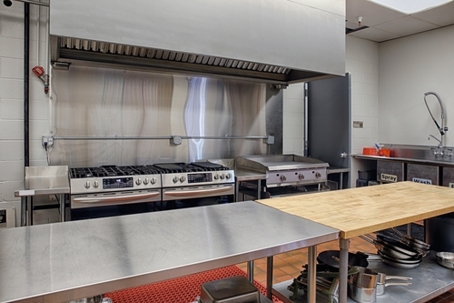
For business owners planning a new commercial kitchen or upgrading an existing space, vent hood installation is a critical step. Commercial vent hoods are central to fire safety, indoor air quality, and code compliance for food-service operations. They do far more than capture smoke. They also manage heat, grease-laden vapors, and combustion byproducts generated during daily cooking.
Many owners don’t realize that managing a commercial kitchen exhaust system involves much more than mounting equipment over a cookline. It requires coordinated HVAC planning, ductwork design, rooftop exhaust routing, and system balancing.
As part of our robust HVAC approach at Ideal Partners, we provide complete support for commercial kitchen exhaust systems for Texas businesses. From installation and service to required inspections, cleaning, and ongoing maintenance, our teams manage every major component of a kitchen exhaust system, including the vent hood, makeup air unit, grease duct, exhaust fan, fire suppression system, and controls.
What sets our approach apart is coordination. Our mechanical and fire protection divisions work together to support code compliance and system performance throughout the life of your kitchen. By working closely with industry leaders such as CaptiveAire, we offer a single point of accountability for commercial kitchen exhaust systems—so business owners can stay focused on operations while required systems are addressed in a coordinated, compliant manner.
Why Commercial Vent Hoods Are a Must in Commercial Kitchens
Commercial kitchens generate significantly more heat, smoke, grease, and airborne contaminants than residential kitchens. Vent hoods are designed to capture and remove these byproducts before they accumulate, helping maintain a safer, more comfortable working environment.
Proper ventilation supports employee safety by reducing heat stress and exposure to airborne pollutants. It also helps reduce fire risk by capturing grease vapors before they settle in unwanted areas. In addition, vent hoods help control indoor air quality, which is essential for meeting health department standards.
Because of the volume, intensity, and consistency of cooking activity, commercial kitchens are held to stricter requirements than residential spaces. These standards are intended to protect staff, customers, and the building.
Commercial Vent Hood Code Requirements and Safety Considerations
Commercial kitchen ventilation is regulated by a combination of mechanical codes, fire codes, and health department standards at the local and national levels.
In Texas, vent hoods are generally required when kitchen operations generate excessive heat, steam, grease-laden vapors, smoke, or fumes, and systems must comply with the city’s mechanical code and inspection process. Air removed by a mechanical exhaust system must typically be discharged outdoors, unless an approved recirculating system is used, in a way that does not create a public nuisance.
Nationally, the International Mechanical Code (IMC) requires Type I or Type II commercial kitchen exhaust hoods to capture and confine cooking vapors and residues. The National Fire Protection Association’s NFPA 96 standard also sets requirements for grease removal, fire protection, and system maintenance.
During permitting and inspections, inspectors commonly review several core elements, including:
- Hood coverage and placement
- Exhaust airflow
- Clearance and access
- Fire suppression coordination
Types of Commercial Vent Hoods and Their Applications
Not all commercial vent hoods are the same, and the right choice depends on the type of cooking equipment, heat output, and grease production in the kitchen. Selecting the appropriate hood is essential for code compliance and effective ventilation.
The two types of commercial vent hoods include:
- Type I vent hoods – Used for grease-producing equipment such as fryers, grills, ranges, and charbroilers.
- Type II vent hoods – Designed for appliances that generate heat and steam but not grease, such as dishwashers or certain ovens.
Proper sizing and selection matter because airflow, capture efficiency, and system balance depend on matching the hood to the kitchen’s actual cooking load.
Why Professional Vent Hood Installation Matters
Vent hood installation is a multi-system project that extends beyond a single piece of equipment. Professionals coordinate several components so that the system functions as intended and complies with applicable codes.
In kitchens where fire suppression, mechanical ventilation, and exhaust controls intersect, coordination between HVAC and fire protection teams is essential to meet inspection and operational requirements.
The installation process typically includes:
- Mounting and positioning the hood
- Installing exhaust fans
- Routing ductwork through the building and roof
- Connecting electrical controls and interlocks
- Balancing airflow to prevent pressure issues
When these elements are not properly coordinated, businesses may face inspection delays, system inefficiencies, or the need for rework. Managing the installation as a complete HVAC process helps reduce those risks and supports smoother project execution from start to finish.
Installation Timelines: What Business Owners Should Expect
Installation timelines vary depending on whether the project involves new construction or a retrofit in an existing building. New construction often allows for easier planning, while retrofits may require additional adjustments to existing ductwork, electrical systems, or roof structures.
Timelines often extend beyond the physical installation itself. Permits, plan reviews, inspections, and coordination with fire suppression systems add time. Factors such as hood type and size, ductwork complexity, and code requirements also affect scheduling. In many cases, the full process—from design through final approval—can take several weeks, depending on the project’s scope.
Proactive Planning for a Smoother Installation Process
Early planning is one of the most effective ways to reduce delays and complications. Addressing vent hood requirements during the kitchen design or renovation phase improves coordination with HVAC, roofing, and electrical systems.
Working with a provider that can manage hood installation and rooftop exhaust as part of an integrated HVAC service can simplify communication and scheduling. Preparation helps business owners anticipate inspections, avoid last-minute changes, and move through the process more efficiently.
Supporting Code Compliance and Kitchen Safety from the Start
Commercial vent hood installation is a foundational element of kitchen safety, code compliance, and long-term system performance. By understanding requirements, hood types, and realistic timelines, business owners can make more informed decisions and plan projects with fewer disruptions.
For many Texas businesses, working with a single provider that can support installation, inspections, maintenance, and fire protection helps simplify compliance over the life of the kitchen.
Ideal Partners installs commercial vent hoods and manages the full ventilation process through our HVAC services, helping businesses coordinate critical components from design through completion and beyond. Business owners planning a commercial kitchen can benefit from understanding requirements early and working with our professionals who manage the process with safety and compliance in mind.
If you need commercial kitchen vent hood installation in Texas, our team is ready to assist. Contact us at (817) 646-7044 to schedule a consultation.