
In Fort Worth, ant activity can seem to appear overnight. The reality is that ant season isn’t tied to a specific date on the calendar. It’s driven by temperature, rainfall, and soil conditions.
Understanding when ants become active and why can help you take steps early before a minor issue turns into a widespread infestation.
At Ideal Partners, we help families stay ahead of seasonal pest activity with practical, long-lasting solutions designed for our local climate.
When Does Ant Season Start?
Ant season in Fort Worth typically begins when soil temperatures consistently reach about 65–70°F. Because North Texas often experiences early warm-ups, this can occur as early as late February or March.
Rather than thinking in terms of months alone, it’s more helpful to understand how activity unfolds throughout the year:
- Late winter to early spring (February–March) – As the soil warms, colonies become active and begin foraging. You may notice the first signs of ants around foundations and sidewalks.
- Mid to late spring (April–June) – Heavy rainstorms are common in Fort Worth. Flooded colonies push ants above ground, leading to a noticeable spike in indoor invasions and lawn mounds.
- Summer (June–August) – Long, hot, dry periods drive ants indoors in search of moisture. Kitchens, bathrooms, and laundry rooms become common targets.
- Early fall (September–October) – Colonies remain active while temperatures stay warm, continuing to gather food before cooler weather slows activity.
Because Fort Worth experiences heavy spring rains and intense summer heat, ant pressure can persist much longer than you might expect.
Common Ant Species in North Texas
Several common ant species are especially active during spring and summer. While they may look similar at first glance, each type behaves differently, and the level of risk to your home or yard can vary.
Some ants are primarily a nuisance, appearing in kitchens or along baseboards. Others can damage wood structures or pose painful stinging hazards in your lawn. Identifying which species you’re dealing with is the first step toward choosing the right response.
Fire Ants
Fire ants are among the most well-known pests in Texas. They build large, visible mounds in lawns and open areas. After rain, these mounds often multiply rapidly.
Fire ants are primarily an outdoor problem, but they pose a stinging risk to children and pets. Disturbing a mound can trigger aggressive swarming behavior, making yard activities uncomfortable and sometimes painful.
Odorous House Ants
These small, dark brown ants are commonly found inside homes. When crushed, they emit a distinct odor often described as resembling rotten coconut.
Odorous house ants tend to invade in large numbers, especially after rain. While they do not cause structural damage, their ability to form extensive indoor trails makes them a persistent nuisance.
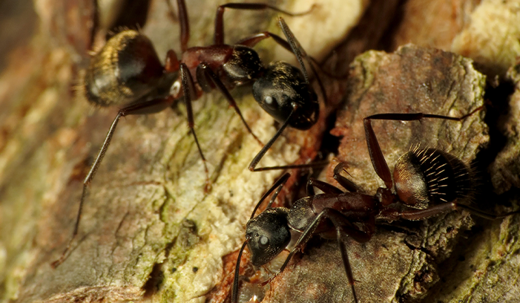
Carpenter Ants
Carpenter ants are larger and may be black or red-and-black. Unlike termites, they do not eat wood, but they tunnel through damp or decaying wood to build nests.
If left unaddressed, carpenter ant activity can contribute to structural concerns, especially in areas affected by moisture issues.
Pavement Ants
Pavement ants commonly nest beneath driveways, sidewalks, and concrete slabs. In Fort Worth, where slab foundations are common, they can enter homes through small cracks in the foundation.
They are typically considered nuisance pests but can be difficult to manage once established indoors.
Why Ants Invade Homes After Rain
Spring storms are a major trigger for ant activity. When heavy rain floods underground colonies, ants seek higher, drier ground, which often means your home.
Several local factors make properties particularly vulnerable:
- Slab foundations that allow entry through small cracks
- Expansive clay soil that shifts with moisture changes, creating new gaps
- Irrigation systems or plumbing leaks that provide a steady water source
- Easy access to food inside kitchens and pantries
During summer droughts, the motivation changes. Instead of escaping water, ants move indoors in search of moisture. Either way, weather patterns play a direct role in when and why ants show up.
DIY vs. Professional Ant Control
When ants appear, you might reach for store-bought sprays. While these products can provide immediate, visible relief, they typically address only a small portion of the colony.
It helps to understand how different approaches work:
- Surface sprays – Kill ants on contact but usually eliminate only the worker ants you see, not the queen or developing larvae.
- Bait systems – Designed so worker ants carry treated bait back to the colony, distributing it and targeting the source.
- Mound disturbance – Improperly treating or disturbing a fire ant mound can cause the colony to split and relocate, sometimes creating multiple new mounds.
Professional ant control treatment often combines targeted baiting and perimeter applications to address visible activity and hidden colony structures. Without eliminating the queen, the colony can continue reproducing.
How to Prevent Ant Problems in Your Home
Prevention is most effective before peak activity in late spring and summer. A few proactive steps can help reduce the likelihood of an infestation.
You can lower your risk by:
- Sealing slab cracks – Caulking foundation gaps and entry points limits access.
- Managing mulch depth – Keeping mulch thin and away from the foundation reduces nesting areas.
- Fixing irrigation leaks – Eliminating excess moisture removes a key attractant.
- Trimming landscaping – Keeping shrubs and tree branches away from the home reduces bridge access.
- Storing pet food properly – Sealing containers helps minimize indoor food sources.
While these steps can help, persistent or widespread activity may require a more comprehensive and professional approach.
Stay Ahead of Ant Season in Fort Worth
Warm soil, spring rains, and long summer heat shape ant season in Fort Worth. Because activity often begins earlier than expected, waiting until mounds spread or indoor trails multiply can make control more difficult.
Planning, especially before peak rain and heat, can help reduce disruption and protect your property. Ideal Partners provides pest control services tailored to North Texas’s climate, offering prompt support as ant activity begins to rise.
Contact us at (817) 646-7044 to schedule an appointment and discuss your ant problem.