
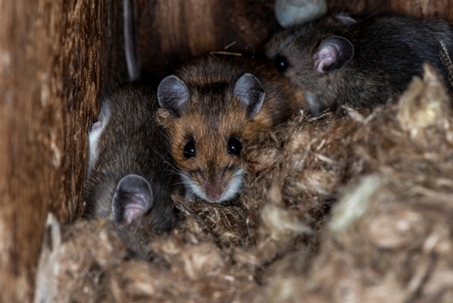
If you're hearing something move across the ceiling after dark this fall, the weather explains most of it. Average monthly temperatures across the area fall from the mid-80s in September to the low 60s by November, and rats and mice answer that swing by looking for a warm, dry space with food in it. Your attic qualifies.
At Ideal Partners, our rodent calls climb every October, and they come from houses nobody checked before the first cool front.
Call (817) 646-7044 or schedule online to set up rodent control in Fort Worth, and you'll hear what the inspection found before you hear a price.
Why Do Rodents Move Indoors in the Fall?
Cooling nights are the trigger. Fall breeding is the multiplier. Texas A&M AgriLife Extension reports that Norway rats produce their heaviest litters in spring and fall, with four to six litters a year averaging seven to eight young, while a house mouse can have 13 litters in a year and reaches breeding age at six to ten weeks.
That means the two mice slipping in behind a worn garage door seal in early October are part of the working population by Thanksgiving. Rodents don't wait for cold weather to settle in, which is why the timing of an inspection matters more than the season's name.
How Small an Opening Does a Rodent Need?
A mouse gets through a hole the size of a dime or a quarter-inch crack under a door. A rat needs a hole the size of a quarter or a half-inch gap. Neither one has to create the opening, because most houses already have several.
The openings our technicians check first on a fall rodent inspection include:
- Gable and attic vents – Screening rusts through or pulls loose at the corners, and roof rats nest high in attics instead of burrowing, so a torn vent screen is the entry they want most.
- Tree limbs resting on the roof – A branch touching shingles gives a roof rat a climbing route onto the roofline. Our roofing crews cut back what's making contact while they're on the surface.
- Brick weep holes and utility penetrations – The gaps where cable, gas, and refrigerant lines pass through the wall are usually caulked, and caulk is no barrier to a rat. We pack those openings with hardware cloth or copper mesh.
- Garage door bottom corners – The two corners where the seal meets the jamb wear open first, and a quarter inch there is enough for a mouse.
- Separated soffit and fascia – A soffit panel lifted by wind opens straight into the attic. Because roofing and pest control operate under one name, the repair and rodent work are streamlined.
Sealing is the part that holds. AgriLife recommends quarter-inch hardware cloth, metal flashing, or steel wool for openings like these, and we match the material to the opening rather than filling everything with foam.
What Tells You It's More Than One Mouse?
Droppings give you the count. Fresh droppings scattered across multiple rooms indicate an established population, and AgriLife notes that 100 or more roof rats can live in a single structure without fighting over it.
Gnaw marks on wiring are the reason this stops being a nuisance. Rodent teeth keep growing, wire insulation is soft, and chewed wiring in an attic starts fires. Our technicians check the attic runs for damage and identify the species, because the approach to a roof rat and the approach to a house mouse aren't the same.
Why Traps Alone Don't Hold
Trapping removes what's inside. It does nothing to the opening that let them in, so the next group follows the same route within weeks. AgriLife calls the working version integrated: removal, exclusion, and cutting off food and water together.
We price the trapping and sealing work separately and upfront, so you can weigh each one rather than approve a single number. Products get chosen with the household in mind, including pet-friendly options, and every service we perform is backed by our satisfaction guarantee.
Get the House Sealed Before the First Cool Front
Fall rodent season runs on temperature and on breeding, and each is already working by the time you hear something overhead. A house inspected and sealed in September gives the October population nowhere to go. Ideal Partners has served North Texas since 2009O. our pest division is a member of the National Pest Management Association, and we schedule same-day appointments with 24-hour emergency service.
Reach out online or call (817) 646-7044 for fall rodent control, and know which openings are letting them in before the temperature drops.