
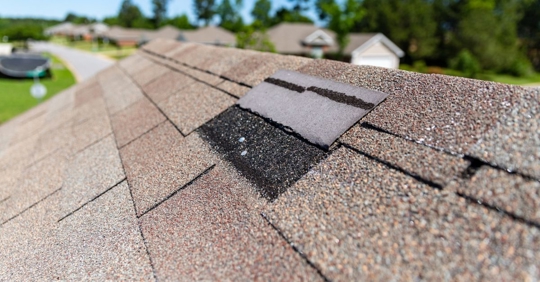
Severe spring and summer weather is common in North Texas, and major hailstorms can leave property owners feeling overwhelmed. When ice chunks fall from the sky at high speeds, your roof takes the brunt of the impact to protect your family inside. While some storm damage is easy to spot from your driveway, hail often causes hidden issues that are difficult to see with an untrained eye. Learning how to safely look for these subtle signs of wear can help you address small issues before they turn into costly water leaks inside your home.
If a recent storm has passed through your North Texas neighborhood and you want to ensure your home remains completely protected, please do not hesitate to reach out for guidance. You can connect with our team at Ideal Partners by filling out our online contact form or by calling (817) 646-7044 to speak with an expert today.
Check Your Property from the Safety of the Ground
The very first step after the clouds clear is a thorough walk around your yard, but you should always keep your feet firmly planted on the ground. Walking on a roof after a storm is highly dangerous because loose asphalt granules and cracked surfaces can cause slips and falls. Instead, you can look for clue points around the perimeter of your house that indicate how hard the weather hit your property.
Hail rarely hits a home without leaving clues on eye-level items. By inspecting your landscaping, patio furniture, and lower exterior surfaces, you can get a good idea of whether your rooftop needs professional attention.
- Look closely at your metal gutters and downspouts to see if they have small, round dents or dimples from falling ice.
- Check your window screens, vinyl siding, and outdoor light fixtures for cracks, punctures, or chips.
- Examine your wooden fences or deck railings to see if the hail scraped or splintered away the paint and stain.
Identify Subtle Damage to Asphalt Shingles
Asphalt shingles are designed with a layer of tiny ceramic granules on top that shield the underlying waterproof material from the sun and rain. When large hail strikes a shingle, it often knocks protective granules loose without necessarily cracking the shingle. This type of damage is very sneaky: your roof might look completely fine from a distance, but the material's lifespan has been compromised.
Without that outer granular coating, the sun's intense heat will bake the exposed waterproof layer, making it brittle and prone to breaking over time. Spotting this early allows you to schedule targeted roof repair before structural wood rot can begin.
- Bruising: Dark, soft spots on the shingle that feel spongy when pressed lightly, showing where the internal matting was fractured.
- Granule loss: Heavy collections of sand-like particles piling up at the bottom of your downspouts or inside your gutter channels.
- Circular fractures: Small, half-moon shaped cracks in the asphalt surface where the ice impact broke completely through the shingle layer.
Inspect Metal Vents and Flashing
Your roof relies on various metal accessories to properly breathe and prevent water from seeping into seams and valleys. These include exhaust vents, pipe boots, and chimney flashing, which are often made of soft metals like aluminum. Because these materials are softer than asphalt, they show impact marks very clearly and act as a reliable indicator of storm severity.
If your attic vents are covered in deep dents, the underlying components likely felt that same heavy impact. Dented vents can also become misshapen, restricting proper airflow out of your attic or allowing blowing rain to find a path inside. Keeping an eye on these metal pieces is a key part of maintaining overall roofing health.
- Use binoculars from your yard to inspect the metal caps on your roof ridge line for deep dimples.
- Look for gaps or lifting where the metal flashing meets your shingles, especially around chimneys and dormers.
- Schedule an inspection if you notice that any vent hoods look squashed or tilted out of their original position.
Look Inside for Signs of Attic or Ceiling Leaks
Not all storm indicators happen on the exterior of your property. Sometimes, the most telling signs of hail impact show up inside your living space days or even weeks after the weather event. A compromised roof allows rainwater to seep into the attic insulation, where it eventually works its way down to your drywall ceilings.
Checking your upper-level rooms and attic space after a heavy downpour is an excellent way to catch problems early. If you notice dampness or discoloration indoors, act quickly to get professional roof storm damage repair to prevent mold growth and protect your personal belongings.
- Walk through your top-floor bedrooms with a flashlight to look for yellow, brown, or bubbling water rings on the ceiling plaster.
- Check your attic rafters for damp wood, active dripping, or a sudden musty odor that indicates trapped moisture.
- Take note of any peeling paint or sudden wallpaper bubbling around the uppermost corners of your walls.
Navigate the Restoration Process Safely
Dealing with home repairs after a major storm can feel stressful, especially when door-to-door sales crews flood the neighborhood offering quick fixes. It is important to move through the restoration process carefully and methodically to protect your investment. Working with local, established service professionals ensures that your property is evaluated accurately and fixed correctly.
Before making any major decisions or signing paperwork, having an official assessment of your property is essential. Investing in professional roof inspections gives you a clear, detailed report of your home's actual condition so you can make informed decisions.
- Document everything by taking clear, dated photographs of any damage you find around your yard and on your home's exterior.
- Choose a local company with a permanent physical office in the area so you know they will be around to support their work in the future.
- Avoid contractors who pressure you to sign contracts immediately or ask for full payment before any materials arrive at your home.
Taking a calm, educated approach to storm damage helps keep your household safe and prevents minor hail impacts from turning into major household headaches. Staying observant from the safety of the ground is the best way to safeguard your property.
If you suspect your home has sustained hail damage after a recent North Texas storm, our team at Ideal Partners is here to help with honest evaluations and expert guidance. Please reach out to us by calling (817) 646-7044 to connect with a helpful team member or book your professional property assessment via our online contact form.